Fix Chinese Language Pack Display Issues on Non-Chinese Windows
Translation
This post is also available in Simplified Chinese.
Although Windows lets you change its language by installing a language pack, in typical Microsoft fashion, some ancient leftovers do not follow that setting. Language packs, which apparently disturb the purity and harmony of the system, are no exception:
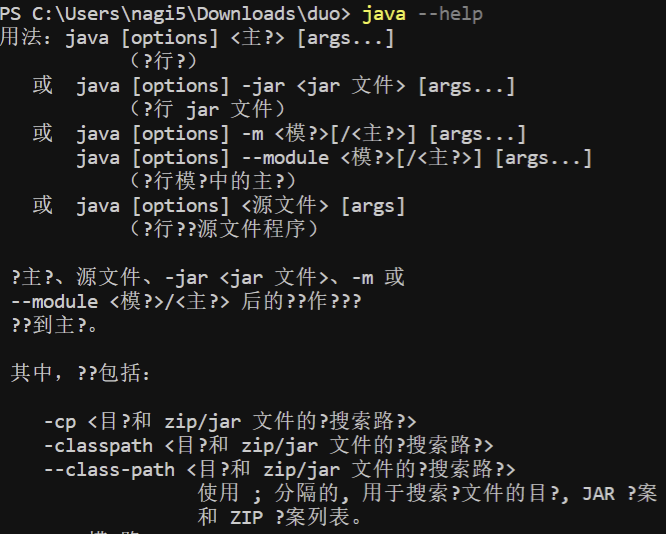
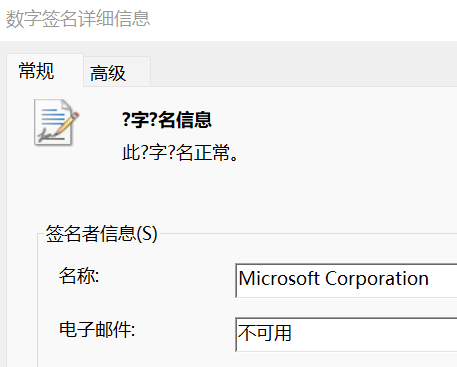
The screenshots above show Simplified Chinese installed on Traditional Chinese Windows 11. Many simplified characters become question marks. At least characters shared by both writing systems remain visible; on English Windows, everything shown above turns into question marks. I have only one thing to say: Fxxk M$!
Today I finally could not tolerate these incomplete Java error messages any longer. I intended to look up which Windows environment variable controls the output language of command-line programs, but unexpectedly found a deeply buried language setting instead:
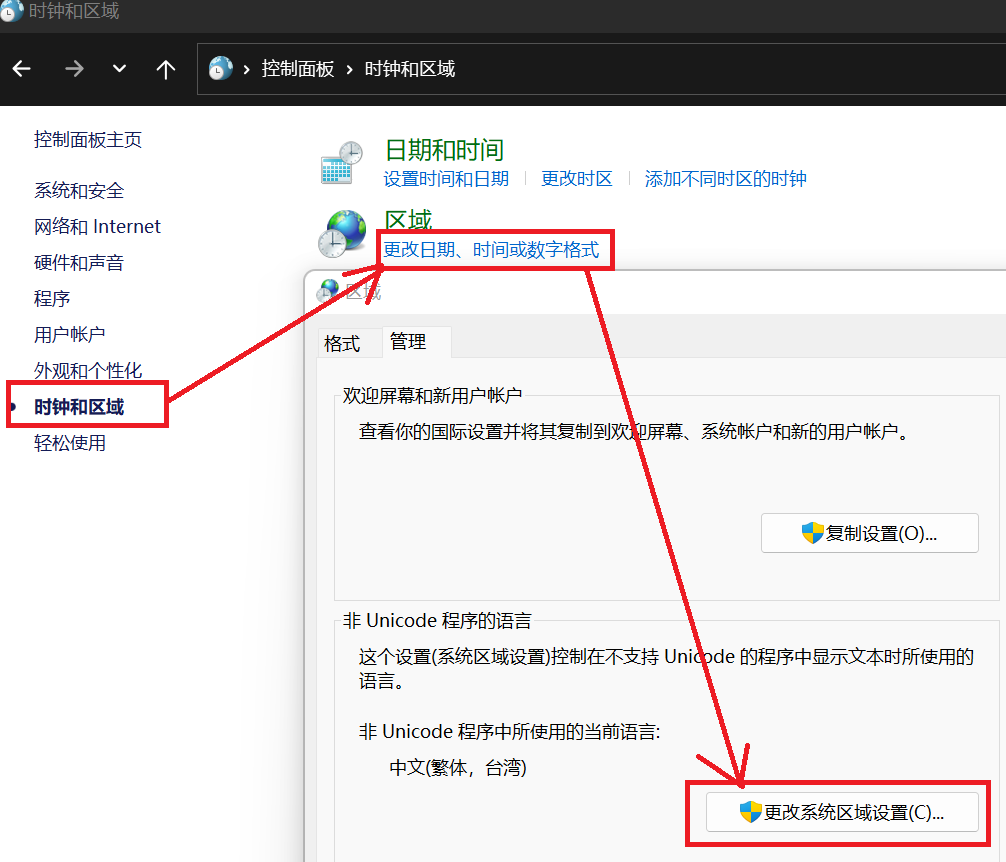
Open Control Panel (to emphasize the importance of the new UWP Settings app, Microsoft has done its best to remove Control Panel from the Start menu, desktop, and system settings; fortunately, entering “Control Panel” directly in File Explorer’s address bar still works) → Clock and Region → Change date, time, or number formats → Administrative → Change system locale. Judging from Microsoft’s description, the problem is caused by different behavior between MBCS and Unicode programs. Microsoft could learn something from Apple here: give users too many choices and the pieces eventually become inconsistent; give them no choice and most people will praise the operating system for its consistency instead of complaining.
I doubt I will ever see these old Control Panel items, unchanged since the XP era, integrated into the UWP Settings app. One day this heavy historical baggage will drag Windows down.